Denim Kilts – Scottish Kilt

16 Styles · Custom Tartan

Denim Kilts

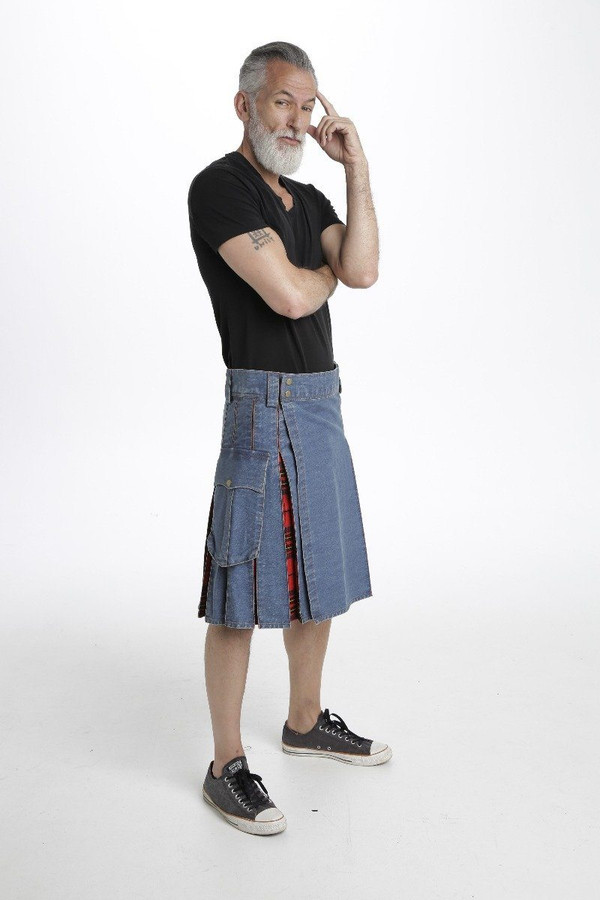
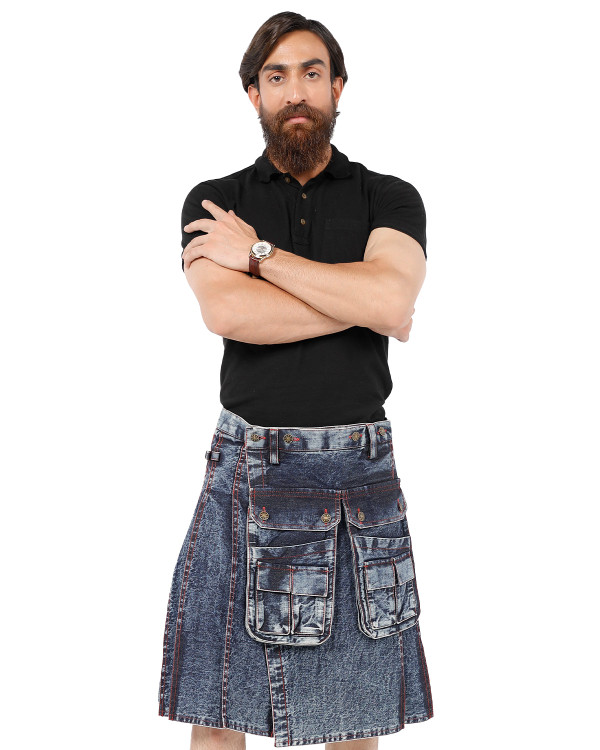
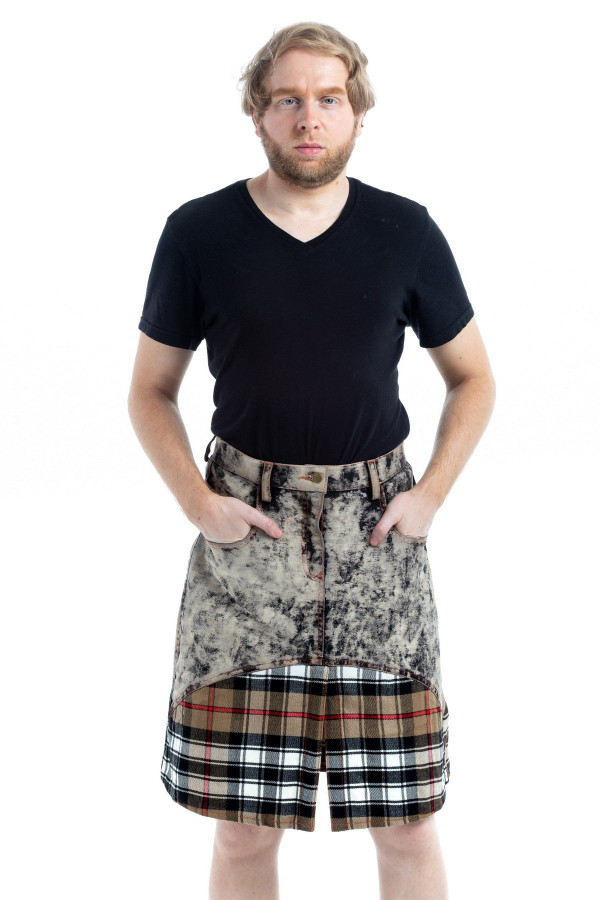
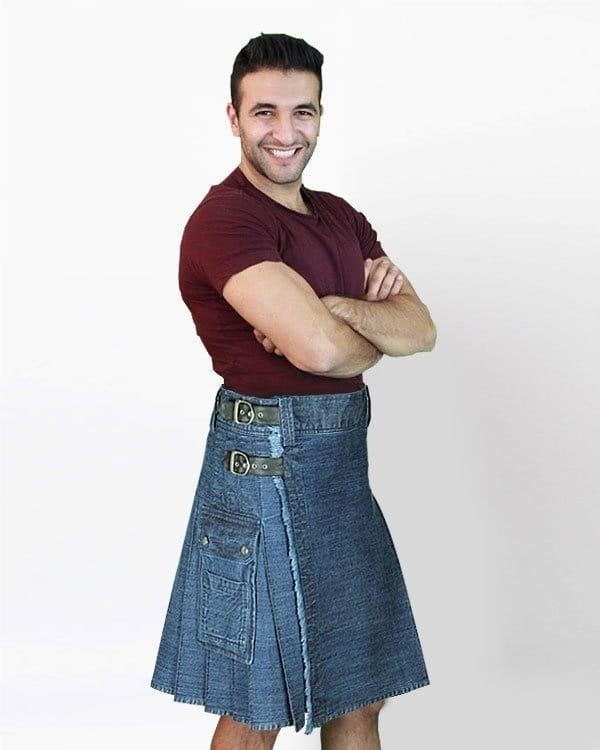
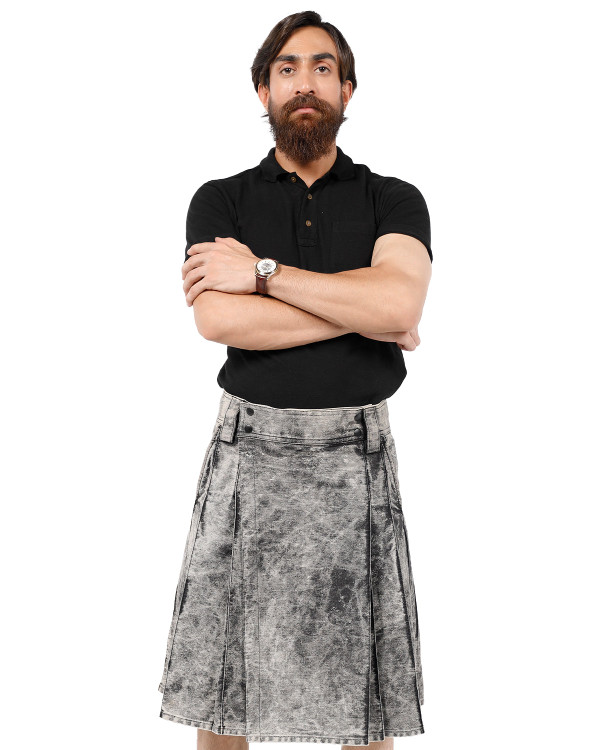
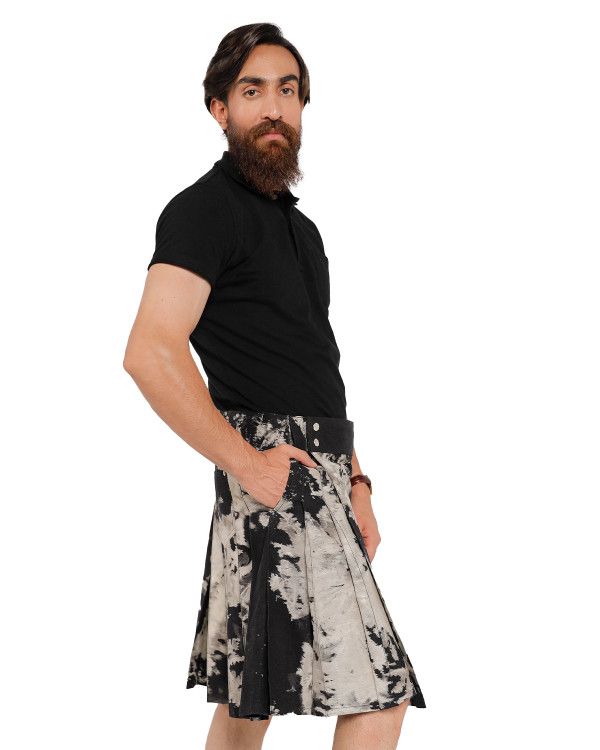
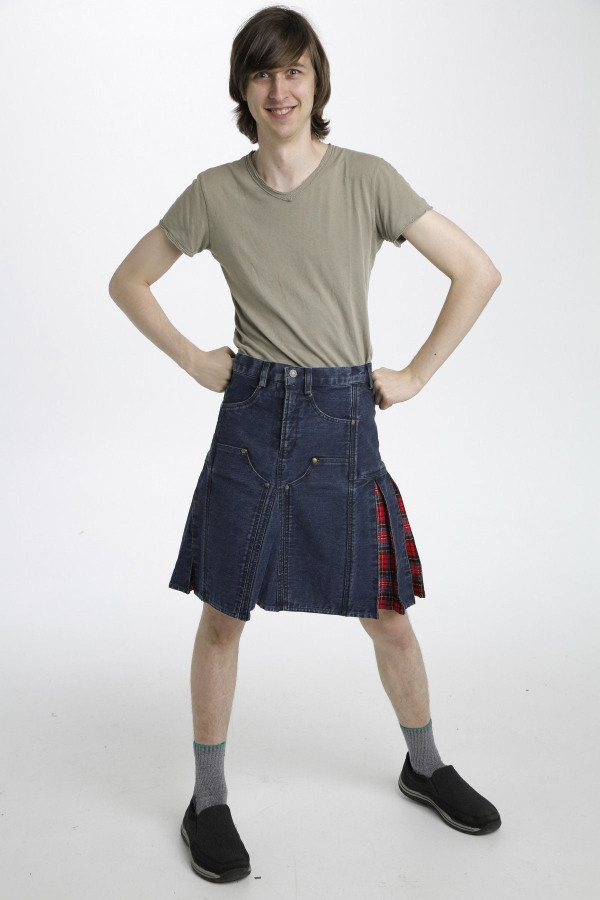
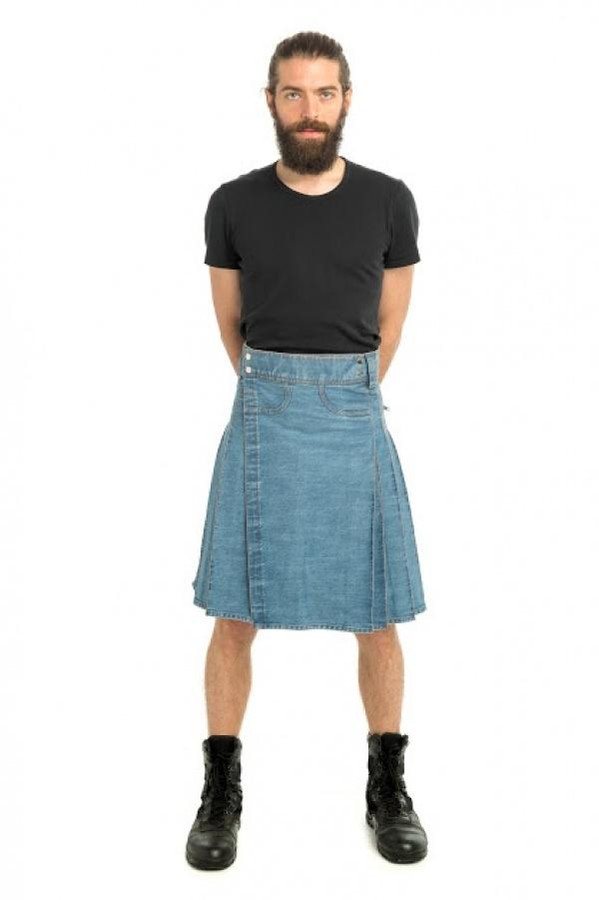
A denim kilt is the easiest kilt to own if you have never owned one. Familiar cloth, familiar washes, pockets where you expect them, and a pleated back that keeps it unmistakably a kilt rather than a wrapped skirt. Denim breaks in the way jeans do, softening at the fold lines and fading where it creases, so it looks better after a year than it did new. Wear it with boots and a plain tee and it reads as ordinary clothing. Cut to your own waist, hip and length. Wash affects both look and break-in. A dark rinse starts closest to a formal line and fades slowest. A classic mid wash is already broken in and reads casual immediately. Raw and unwashed denim gives the sharpest fade lines over the first year but needs the most patience. All three carry belt loops and real pockets, which is the practical advantage denim has over every traditional kilt in the range.

About this collection

Denim Kilts

Most people who want to wear a kilt regularly stall at the same point. Tartan feels like a costume outside an occasion, and utility cotton reads workwear. Denim solves it, because denim is the most neutral cloth in a Western wardrobe. Nobody looks twice at denim, so the shape becomes the only thing to notice and the pattern stops competing.

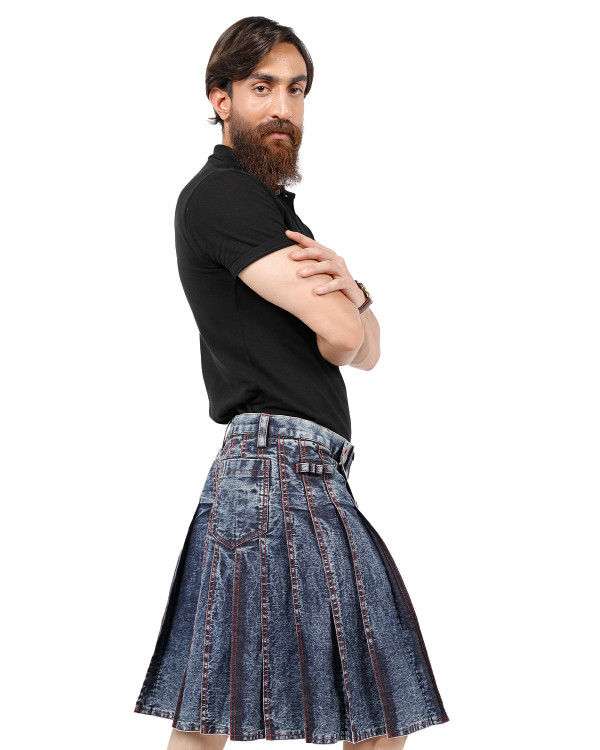
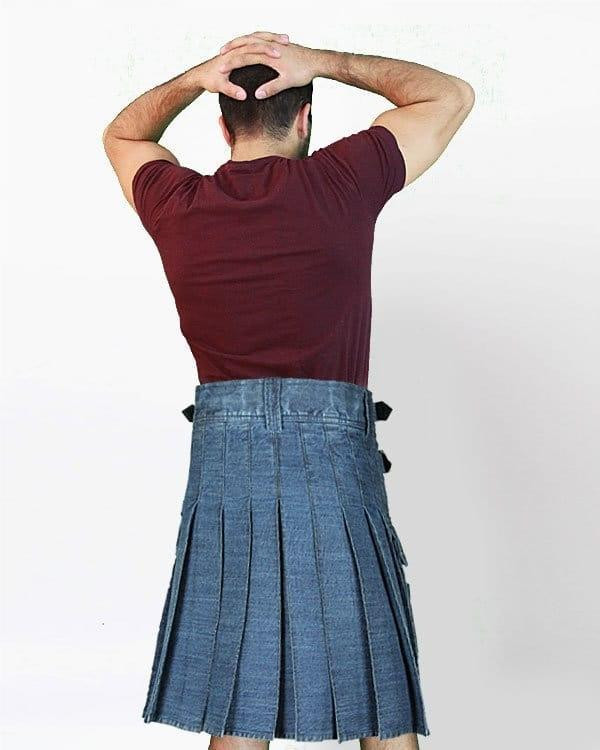
The construction is a proper kilt. Wrap front with two aprons, knife pleating across the back, and the hem at mid knee. Where it borrows from jeans is the practical detail, so you get belt loops, real pockets and hardware that suits the cloth. Denim also does something tartan cannot, which is age visibly. Fade lines follow your own wear.

Wear it exactly as you would wear jeans. Boots, trainers, plain shirts and knits all work, and you can skip hose, sporran and every other piece of Highland kit entirely. If you want tartan in a similarly relaxed cut, look at contemporary kilts. If you want pockets and heavier hardware, see utility kilts or hybrid kilts, and leather kilts for something with real weight.

Denim Kilts

Showing all 16 products
★★★★★
Loading reviews…
5★
4★
3★
2★
1★

Shop by Inspiration

Made to Measure. Made to Last.

Each piece is expertly tailored, carefully finished and fitted to perfection, honouring Scotland's rich tailoring tradition.

Common questions

Frequently asked questions

A kilt built from denim rather than tartan cloth. It keeps the defining construction, two overlapping aprons at the front, knife pleats across the back, a hem at mid knee and a wrap fastening, but uses the cloth and the practical detailing of jeans. Belt loops and pockets are standard, which traditional kilts do not have at all.

Yes, and that is largely the appeal. Denim loses colour fastest where it flexes and rubs, so fade lines build at the pleat folds, along the seat and around the pockets over the first year or two. Wash it inside out and less often than you think to control the pace. The result is a garment that looks specific to you rather than off a shelf.

It is the easiest first kilt, yes. Denim carries no formality and no cultural weight, so you can wear one to the shops without feeling like you are making a statement, which is the thing that stops most people wearing a kilt twice. Buy a tartan kilt first only if your reason for wanting one is a specific event.

You can, but the two registers fight. Hose, flashes, ghillie brogues and a dress sporran all signal formality, and denim signals the opposite, so combining them tends to look unresolved rather than deliberate. If you want one traditional element, a plain leather sporran in a mid brown sits comfortably with denim. Leave the rest off.

At the natural waist, around the navel, with the hem landing at the middle of the kneecap. Denim has very little stretch, so measure the waist where you actually want it to sit rather than assuming you can pull it down onto the hips like jeans. Most men take a kilt waist one to two inches larger than their jeans size.

Cold water, inside out, and as rarely as the garment will tolerate, which is the same advice as for raw denim jeans. Hang it to dry rather than tumbling it, because heat shrinks cotton and can distort pleating. Pressing the pleats while slightly damp keeps them crisp. Frequent hot washing is the fastest way to flatten the pleats permanently.

In any workplace that accepts jeans, yes. Denim carries no formality and no cultural signal, so it reads as ordinary clothing in a way that tartan does not. Where it will not pass is anywhere with a formal dress code, in which case you want a tartan kilt rather than a substitute.

Cotton denim shrinks slightly on first wash, mostly in length. Wash cold and hang to dry rather than tumbling, which is where most shrinkage actually happens. If you are ordering to an exact length for an event, mention it in the order notes so an allowance can be made before cutting.

Behind the bench

Inside the workshop we own

One minute with the makers who cut, pleat and stitch every order. No racks of standard sizes, because there is nothing to stock.

1 minute · Filmed on the workshop floor · 24,000+ views